Blog / Founder field notes
What Happens After the Creator Posts?
Field notes from Smartly ADVANCE in New York: creator fit, the second touch, and why paid media belongs in the brief.
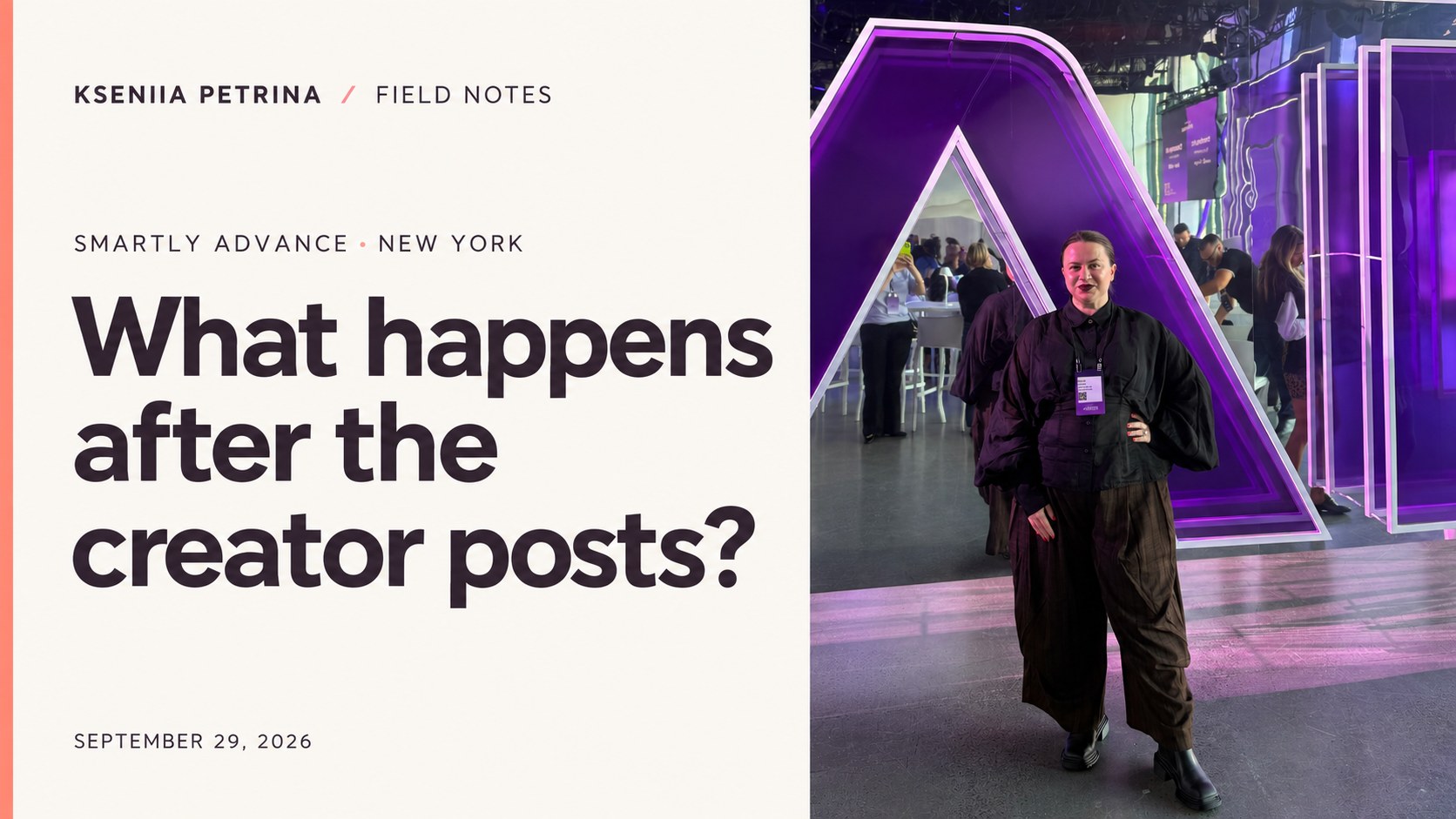
The creator publishes. The campaign report starts filling up. And then comes the question I care about most: what happens next?
I kept coming back to that question at Smartly ADVANCE on September 29 at Spring Studios in New York. I went as a co-founder of Holy Marketing, listening for ideas that would make our next creator brief better.
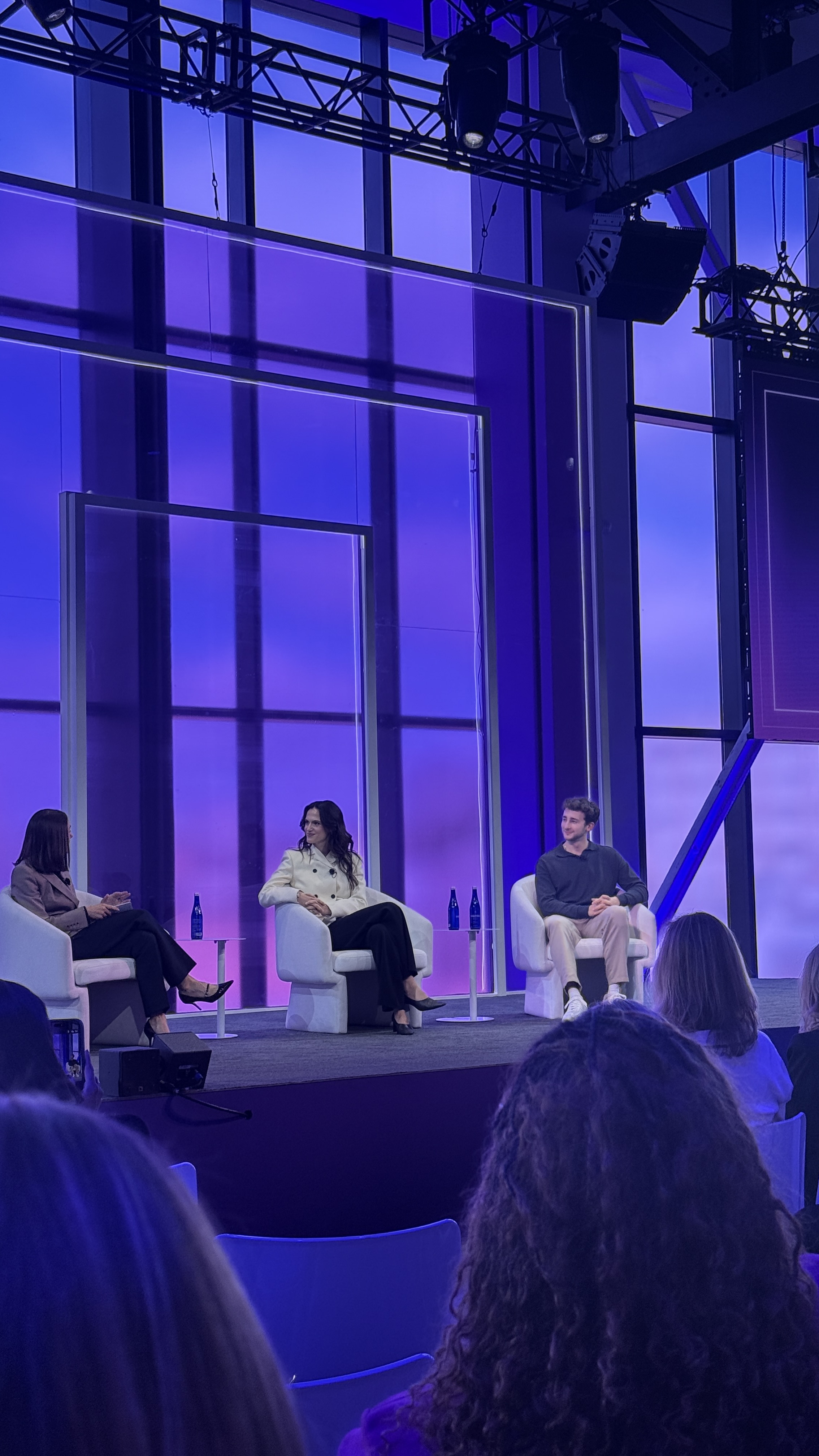
Three conversations stayed with me: Pinterest CEO Bill Ready on discovery, Brandon Baum on the creative logic of a brand partnership, and Cleo Abram on choosing a creator for the story a brand actually needs to tell.
Together, they sharpened a conviction I already had: a creator integration needs a plan beyond its publication date. Here is what I would take from those conversations into a campaign brief.
The valuable moment before someone chooses a brand
Bill Ready described someone who knows what they want to do or buy but has not yet settled on a brand. He connected that moment of discovery with the practical research that follows: the questions people ask before they can make a decision.
That was one of the smartest connections of the day for me. We put enormous effort into getting people interested. The useful answer they need thirty seconds later deserves just as much attention.
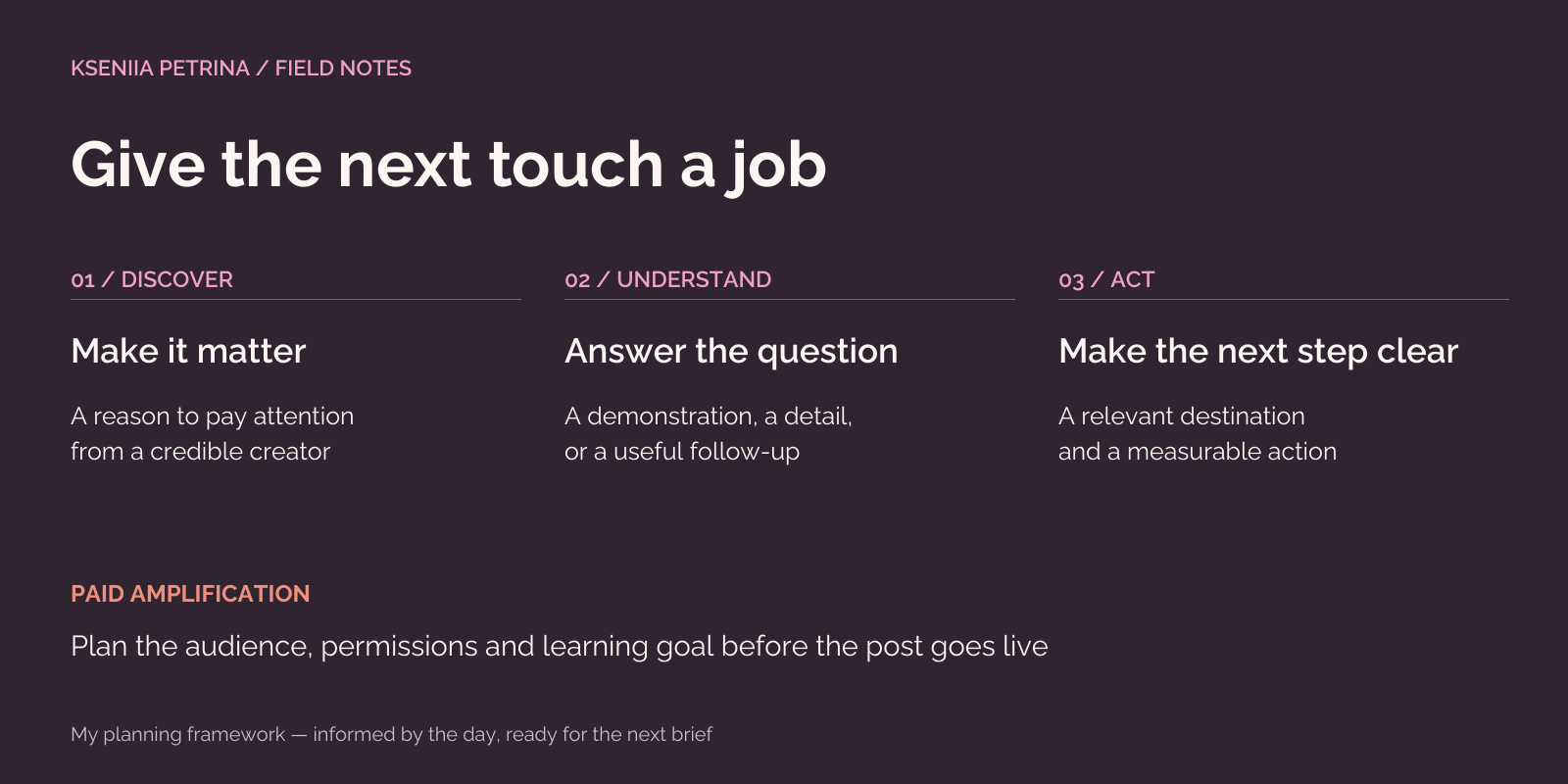
My takeaway: map the question after the inspiration. Someone sees a pair of shoes in a creator's video. They like the look. Their next question might be about sizing, comfort, or whether the shoes work for the way they actually move.
A campaign can anticipate that. The creator can show the product in use. A follow-up can address the most relevant question. The destination can make the same answer easy to find. Each step gives the audience something useful to work with.
That changes the briefing conversation. Alongside the opening hook, I want to know what we are helping someone understand and where they will go for the next answer.
A brand should belong in the creator's world
During the YouTube session, Brandon Baum described an idea for a surreal basketball court made of LEGO. A LEGO partnership made sense because it belonged inside something he already wanted to create.
He also discussed whether a video would be engaging without the brand and whether it was something he would normally make. That is a useful creative test to bring into a briefing.
I would ask a team to describe why the audience wants to watch the idea before listing the required product mentions. If the only compelling thing about the concept is that we have bought the placement, the concept needs more work.
The product still needs a clear role. The goal is an idea that makes sense for the creator, their audience, and the brand at the same time. Getting to that point takes a conversation before the deliverables are locked.
The best creator for a beauty story might be a tech journalist
Cleo Abram offered an example I loved. A beauty company might have invested heavily in research and development, yet struggle to make that work visible to customers. Explaining the science or the technological difference could be a natural fit for her.
That expands the way I want a shortlist to be built. Start with what the audience needs to understand. Then find the person who can make that understandable and whose audience trusts them in that role.
Category is a useful filter. It is a weak substitute for a communication strategy. A demonstration, an explanation, a personal routine, and an expert perspective serve different purposes, even when they feature the same product.
For me, the strongest shortlist starts with a sentence: “We need this person to help this audience understand this.” Reach and demographics still matter. They become more useful once the role is clear.
The second touch deserves a plan
Here is where I land as someone building creator campaigns: a one-off integration can be a useful test. For sustained consideration, I want continuity and a plan for what the audience sees next.
A series gives each piece a job. One video introduces the idea. Another shows it in use. A third answers a question that came back from the audience. The relationship has room to develop, and the brand has room to learn.
That also means a series should earn its length. Booking three nearly identical mentions is not much of a strategy. I would rather brief three distinct reasons for the audience to keep paying attention.
Bring paid media into the first conversation
The other point I want to carry forward is amplification. Buying a creator integration and putting a thoughtful paid plan behind it can be a smart approach. That plan should begin while we are shaping the idea.
I want the creator team and the media team to agree on who the content is for, what action we want to encourage, which versions we may need, and what permissions the partnership includes. Paid usage, duration, placement, and editing rights should be clear before anyone assumes an organic post can become an ad.
Then define what we are trying to learn. A post that people enjoy organically may still need a different opening, context, or destination for a paid audience. I would use the results to decide what to adapt, continue, or stop.
This is my practical conclusion from the day: the creative idea, the creator relationship, and the distribution plan belong in the same brief.
What I am taking back to Holy
For the next campaign conversation, I am bringing five questions:
- What does the audience need to understand before it can act?
- Why is this creator the right person to make that clear?
- What does the next piece of content add?
- How will paid distribution support the idea, with the right permissions?
- What evidence will guide our next creative and budget decision?
That is what makes an industry event valuable to me: leaving with a sharper way to make decisions. Thank you to Smartly for bringing these perspectives into one room, and to Bill Ready, Brandon Baum, and Cleo Abram for the conversations that stayed with me.
Where does your team lose the most continuity: the creator brief, the next piece of content, or the handoff to paid media?
These are my personal takeaways from Smartly ADVANCE on September 29, 2026. Speaker comments are paraphrased from my own event recordings; the campaign recommendations are my interpretation. Watch the speaker excerpts in the original Substack article.
Further reading: the official event agenda · Brandon Baum · Cleo Abram · About my work
Put the next touch into your brief
For a practical next step, use our UGC creative brief for paid social teams. If you are planning creator partnerships, explore Holy Marketing’s influencer marketing services.
Adapted by the author for Holy Marketing. Read the original article on Substack.